

Request Free Quote
Medical Tourism Experts
You can type a treatment name, department or a condition etc. For example: Cardiology, Oncology, etc.

By submitting my data I agree to be contacted and accept the terms.

Hair Transplantation In Istanbul

We will guide you for your hair transplantation journey with every step, and your safety is always our priority.

Our team approach means that you’ll never have to search for answers alone.

We’ll be there for you when you need us most

We have an extensive package that fulfılls your needs. You do not need to worry about anything for your treatment abroad. Our package covers everything from travel to treatment.

Hair Transplantation Package

Starting at

€1900

  • Online consultation with the medical doctor.
  • Blood tests

  • CHOI Pen*
  • Medicine Package*
  • Vitamin treatments
  • First washing in the hospital
  • 1 Month Aftercare Package

  • Transfers with VIP car

  • Accomadation in 5 Star hotel

  • Life Time Guarantee Certificate
  • Interpreter

Get a Consultation

We’ll be in touch within a day!

FUE VITA Hair Transplant

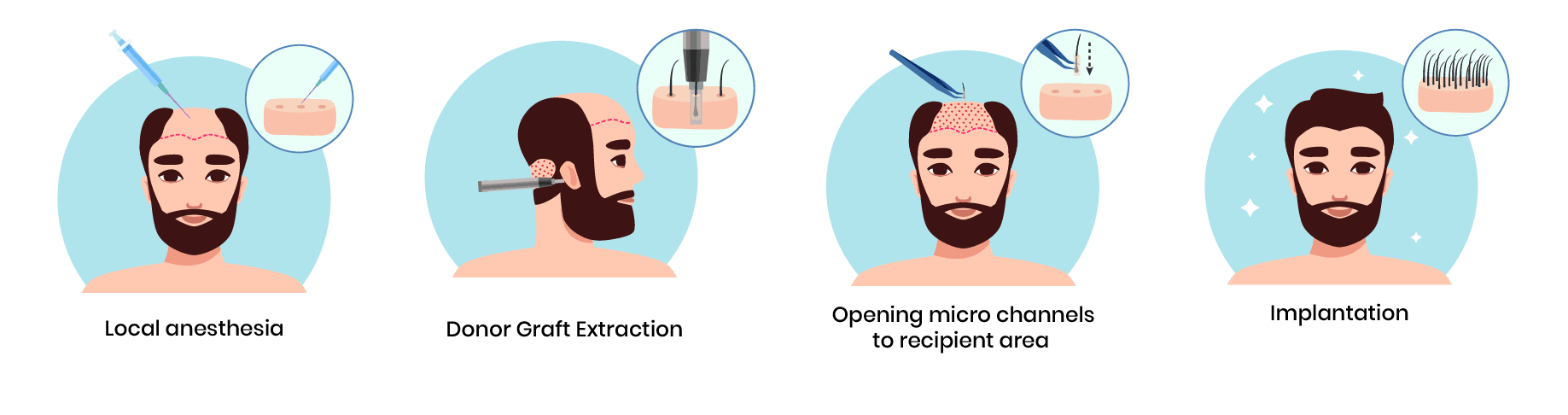
There is a risk of damage to the hair follicles taken during the process of collecting hair follicles with the normal method. They are generally weak and easy to break. Root loss inevitably occurs during intake. Operations performed to minimize the number of losses in hair transplantation have a positive effect on the success of hair transplantation in this sense.
Get a Consultation

OZON FUE Hair Transplant

Ozone therapy is a safe and effective treatment method used in many health fields in recent years. In this treatment method, ozone is added to the blood taken from the patient in question at a rate determined by the doctors and this ozone-supplemented blood is injected back to the patient. Thanks to this treatment method, the success rate in hair transplantation operations is higher.
Get a Consultation

DHI Hair Transplant

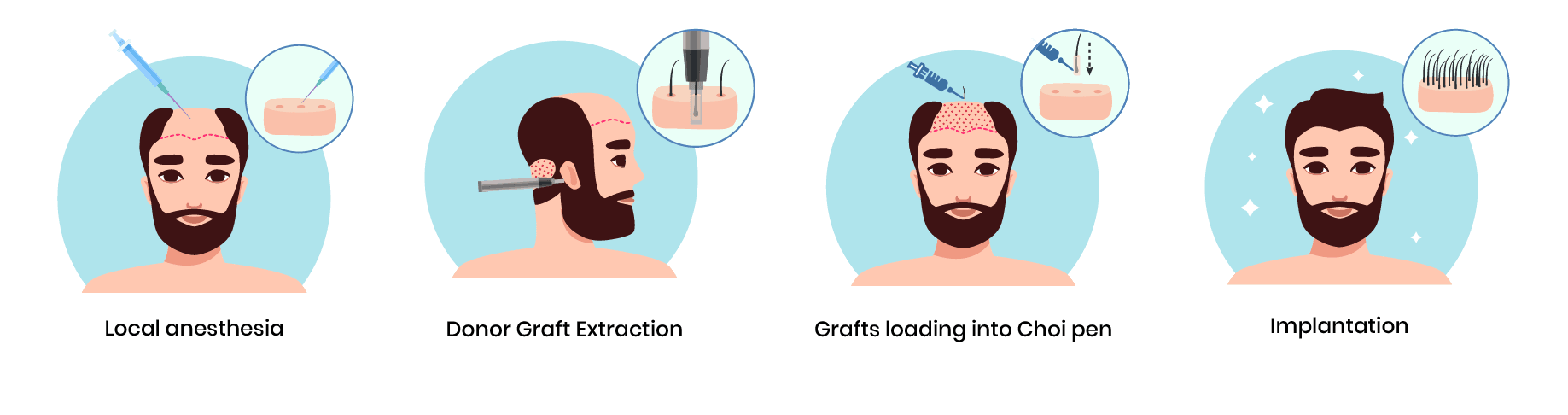
DHI(Direct Hair Implant) is modified version of FUE hair implantation and follows a similar procedure. Our surgeon will remove hair follicles from a part of your scalp, usually the back of your head, and implant them into balding areas by Choi Pen.

Get a Consultation

International Accreditations

Healthcare providers listed on our platforms have international accreditations and certifications, which assess their compliance with international standards.


Trusted by thousands of patients

Working towards a healthier future for all

“I booked the appointment with IntClinics and the communication was extremely informative & detailed. They took care of everything and all I had to do was book my flight. Upon my arrival in Istanbul my transfer driver was there at the airport on time waiting for me and the 5-star hotel booked by IntClinics was amazing. IntClinics and the team at the hospital were amazing! I cannot not stress enough how professional, friendly and helpful everyone at IntClinics was. I was given all the post procedure information & certification, I decided to purchase to the shampoo, foam, vitamins for a healthy hair growth process. I would highly recommend IntClinics due to my great experience!”

Ron Sebold
Get a Consultation

We’ll be your health and wellbeing partner, with you every step of the way.

We’re here for you 24/7
If you arrive at a destination and something’s not quite right, reach out to us. We’re standing by 24/7 to help with things like rebooking assistance and refunds or reimbursements.
Get in Touch
We boost our clients to get more sales

We’ll make sure you see or speak to an expert you can rely on. Fast.

You never need to worry about accessing healthcare again.

Faq About Hair Transplantation

Although hair transplantation is a common and often risk-free operation, it is ultimately a surgical intervention. Therefore, it requires precaution in terms of health. Although it is rare, the risks and complications to be experienced in hair transplantation can be listed as follows;

  • Pain in the operated areas
  • Bleeding in the operated areas
  • Itching
  • Small diameter swelling
  • Infection
  • Drowsiness
  • Bruising
  • Loss of feeling
  • Edema
  • Redness
  • Fluid accumulation in the operation area
  • Inflammation of the hair follicles

Even if many of these risks occur, they disappear after a while in hair transplantation treatment. The precautions of the complications that may occur with one or more of them are foreseen by the hair transplant doctors and treatment is applied to prevent them.

  • DO sleep with your head elevated for the first 7 days, or however long you experience swelling. For most patients, it will only last for a few days, and some may never experience it at all. A recliner is very useful as a makeshift bed. Just think of all the Netflix binge-watching you can accomplish while there!
  • DO apply ice just above the eyebrows to help prevent swelling, which typically occurs on the 3rd or 4th day post-op.
  • DO be very gentle when washing your hair for the first 5 days, DON’T blast the water stream directly onto your scalp as our medical assistant informed you
  • DO hydrate well before and after hair transplant surgery.
  • DO expect some hair to fall out from the transplanted areas about 2 to 4 weeks after your procedure. This is entirely normal and part of the natural hair growth cycle. This doesn’t mean that the follicles are damaged. Your hair will regrow within about three months.
  • DON’T: Sleep flat on your tummy or side, or rub your new hairline against a pillow.
  • DON’T be alarmed if you experience swelling, especially on days 3 and 4 after the surgery.
  • DON’T: Scratch your scalp. Some itchiness is normal the first few days after a hair transplant.
  • DON’T: Wear any hats or ball caps for the first 14 days. The scabs that naturally form after a hair transplant need about three days to solidify. During this time, it is best to keep anything from touching your head.
  • DON’T: Expose your scalp to direct sunlight other than brief periods of time during the first 2 weeks. It’s very common for hair transplant patients to use vacation time for their recovery, and it’s okay to spend that time at the beach or outside, as long as you don’t run any risk of sunburn. You also shouldn’t go scuba diving.
  • DON’T: Engage in heavy exercise in the days following your hair transplant. You have to be careful with exertion – your blood pressure and heart rate need to stay in a safe zone until the risk of swelling has subsided.
  • DON’T engage in any activities that might cause you to sweat heavily
  • DON’T: Dye your hair for 6 months after your procedure; the harsh chemicals can compromise the success of the transplanted follicles when in that initial frail state directly after transplantation. Only organic dye is allowed after 3 months later from the procedure.
  • DON’T consume alcohol for about five days after the procedure; alcohol in your system can interfere with the blood supply to the head.
  • DON’T smoke for a month after the surgery. Again, blood flow is important for the growth of new hair. Giving up smoking altogether would be the best course of action, if you haven’t already done so.
  • Hair transplant surgery is a very effective procedure that is only minimally-invasive and can have a very positive impact on your life. We hope that our tips will help you get the most out of hair restoration.
  • Mild pain may be felt in the first days after the operation. Pain killers are enough to relieve these pains.
  • Bandages are removed the day after the operation.
  • Two days after the operation, the hair is washed. In this process, it is very important to wash the hair with great precision. It is especially important for the health of the hair that the washing tap is not pressurized.
  • It is very important not to get physiologically tired for a few weeks after the operation. Such situations can cause pressure in the head area and cause bleeding to occur.
  • Like sports activities, alcohol and smoking should be avoided for the first few weeks. These substances pose a risk for hair transplantation health as they affect the head area.
  • It is very important to use the medicines given by the doctors regularly after the operation. In particular, antibiotics used against possible infection should be used during the date range determined by the doctors. In addition, making ice pads for the first few days will be useful in preventing edema formation.
  • Hair transplantation is not just an operation. A few months of care is needed. For this reason, regular checks and maintenance should be done without interruption in the period after the operation.

Let’s arrange a call to discuss the details.

Once you request information, we will get back to you within a day.

If you have any questions about your journey, remember that we are only a message away.

IntClinics

24 Hours Support

Request Free Quote
Medical Tourism Experts
You can type a treatment name, department or a condition etc. For example: Cardiology, Oncology, etc.

By submitting my data I agree to be contacted and accept the terms.